
Planning a Healthcare Precinct
How service mix, patient pathways and operator relationships shape viability
AUTHOR: John O’Brien | Chief Revenue Officer, Perfect Practice
What makes a healthcare precinct work?
There is growing interest in healthcare precincts across Australia, bringing together medical specialists, general practice, diagnostic imaging, allied health and other services in one location.
The attraction is understandable. For patients, it offers the potential for more convenient access to care. For healthcare operators, it creates opportunities for collaboration and shared infrastructure. For developers and investors, it offers a way to bring complementary healthcare services together within a purpose-built environment.
But bringing several healthcare providers into the same building does not necessarily create a functioning healthcare precinct.
A development may be successfully leased to medical tenants without those services operating as a connected healthcare destination. Equally, an ambitious clinical model may look compelling on paper but lack the patient demand, referral relationships or commercial foundations needed to support it.
The challenge is bringing these considerations together before decisions about the building, tenant mix and delivery are locked in.
Start with the healthcare need
The starting point should be understanding what the local community needs, rather than identifying which healthcare tenants might fill the available space.
Australia’s demand for healthcare services is substantial. The Australian Institute of Health and Welfare reported approximately 200.3 million non-hospital Medicare-subsidised primary care services in 2024–25, including 167.2 million GP attendances and 28 million allied health attendances. A further 56.7 million non-hospital Medicare-subsidised services were provided for specialist consultations and diagnostic imaging.
These figures demonstrate the scale of healthcare activity, although Medicare data does not capture every service provided across the health system.
National demand, however, does not establish whether a particular service will be viable in a particular location.
Population growth, demographics, chronic disease, existing healthcare providers, workforce availability, hospital relationships, travel patterns and referral networks all influence what a local market can support.
A growing population may need additional primary care capacity. Another catchment may benefit from better access to specialist consulting, diagnostic imaging or rehabilitation. In some locations, the opportunity may be to bring procedural and treatment services closer to patients who currently travel considerable distances for care.
The important question is what healthcare need the precinct is intended to address, and whether sufficient demand exists to support the proposed services.
The anchor shapes the precinct
Most precinct models have one or more anchor services that establish a foundation for the wider development.
Depending on the catchment, that anchor might be general practice, medical imaging, a specialist group, day surgery, oncology or an established hospital relationship.
Choosing the right anchor is more than securing a large tenancy. The operator influences patient activity, which services may reasonably complement it, the physical requirements of the building and the confidence other healthcare providers have in the development.
An Australian example is the Morayfield Health Precinct in Queensland.
A 2023 published case report examined its development as an integrated, community-based healthcare model, with general practice forming the anchor for a broader range of services.
The authors identified deliberate planning, tenant selection, governance, team-based care, referral networks and flexibility for expansion as important components of the model.
While Morayfield represents one approach rather than a model that can be replicated everywhere, it demonstrates why the selection of an anchor, complementary services and the way providers operate together need to be considered early in the development process.
The right anchor is ultimately the one that responds to local healthcare demand and creates a credible basis for complementary services.
Build the service mix around patient pathways
One of the more interesting aspects of precinct planning is understanding how different healthcare services relate to one another from a patient’s perspective.
For example:
- An orthopaedic service may be complemented by diagnostic imaging, physiotherapy, rehabilitation and pain management.
- A women’s health centre may bring together specialist consulting, imaging, pathology and fertility services.
- A general practice may sit alongside pathology, pharmacy and selected allied health providers.
- An oncology service may be supported by imaging, infusion services, pharmacy and supportive care.
These combinations are examples, not predetermined models.
The objective is to understand the patient’s healthcare journey and identify where services located together could improve convenience, access and communication.
There is also an important commercial consideration. A service should not be included simply because it appears complementary on a tenancy plan. Each operator needs sufficient demand, access to an appropriate workforce, a sustainable funding model and a compelling reason to operate from that location.
For the model to work, the proposed patient pathways need to make clinical sense, and the individual operators need viable businesses.
Referral relationships cannot be assumed
This is an area I believe deserves particular attention.
It can be tempting to assume that healthcare providers located within the same precinct will naturally refer patients to one another.
In practice, proximity does not guarantee referrals.
Referral decisions are shaped by clinical need, professional relationships, service quality, availability, patient preference and confidence in the receiving provider.
A specialist may refer to an imaging provider within the precinct where that service meets the patient’s needs. Equally, they may continue to use established external providers.
The same applies to general practice, allied health, procedures and other specialist services.
Research examining co-located community care teams in East London found that bringing services together can support integration and communication, but that physical proximity alone is insufficient. Professional relationships, appropriate infrastructure and supportive working arrangements also matter.
This has implications for how precincts are planned and managed.
Providers need opportunities to understand each other’s capabilities, establish professional relationships, communicate effectively and coordinate care where appropriate. Importantly, referrals must remain based on clinical need and patient choice.
The objective is not to create a captive referral network. It is to develop an environment in which appropriate collaboration is easier and relationships can develop over time.
The building must support the healthcare model
Once the service mix and intended operating relationships are better understood, the physical requirements of the development become clearer.
This is where early coordination between healthcare operators, developers, designers and delivery teams becomes particularly important.
The location of services within the building can influence patient movement, accessibility, staff workflows and the opportunities for shared facilities. However, not every service is suited to shared infrastructure.
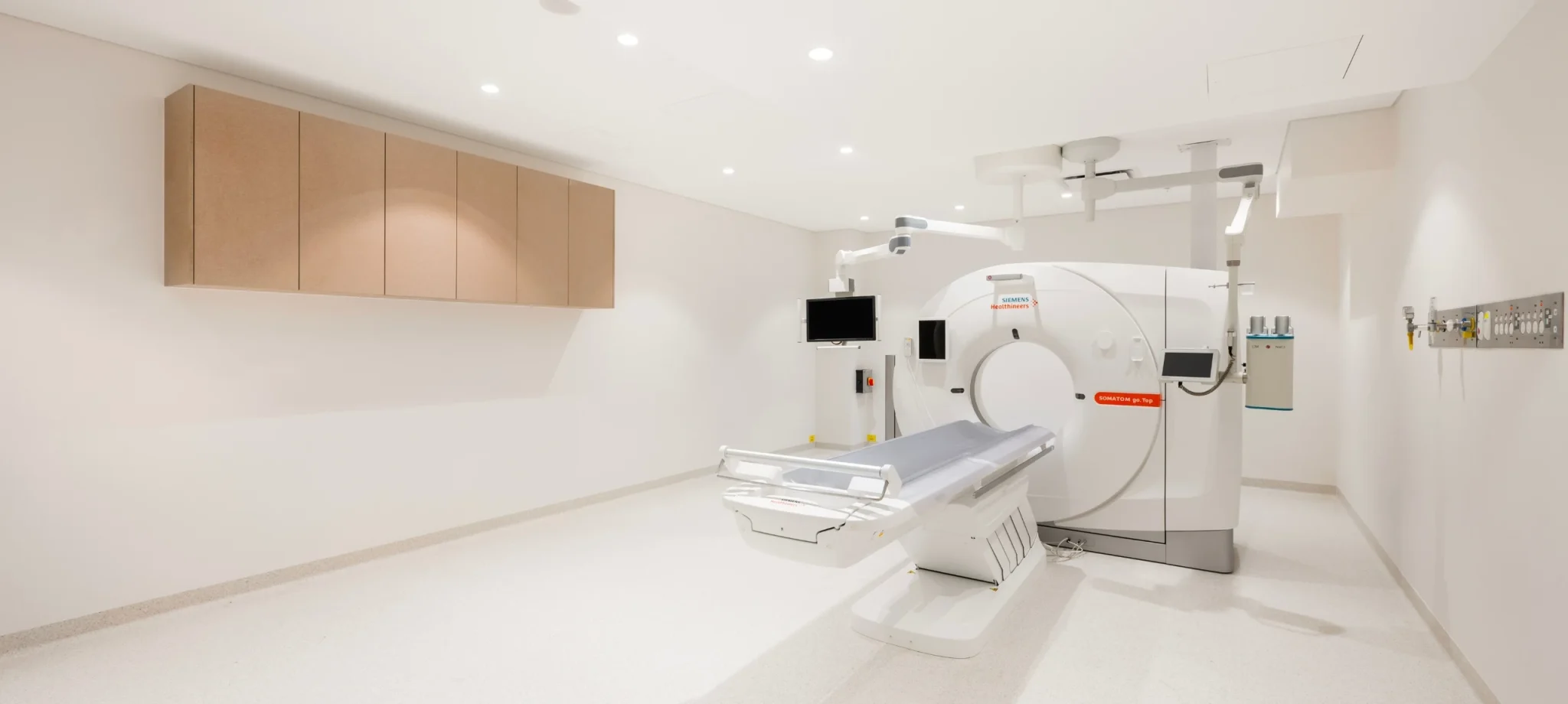
Medical imaging, day surgery, oncology and other specialised services can have specific requirements for patient access, waiting areas, equipment installation, building services and clinical workflows.
There are also requirements that extend beyond individual tenancies.
Parking, drop-off areas, accessible movement, lifts, loading, waste management, power, cooling and future equipment replacement all need to be considered across the wider development.
A building that can accommodate several consulting practices may not necessarily support a combination of imaging, procedural and treatment services without significant infrastructure upgrades.
Future expansion is another consideration. Healthcare demand and technology will change, and the ability to introduce additional services or replace major equipment can become important to the long-term performance of the precinct.
The earlier these requirements are considered, the better the opportunity to identify constraints, understand costs and avoid decisions that may limit future use.
Commercial viability matters for every stakeholder
There is more than one business case to consider when planning a healthcare precinct.
For the developer or property owner, the project must provide an acceptable investment return, manageable development risk, suitable lease arrangements and sustainable occupancy.
For individual healthcare operators, the focus is different. They need patient demand, access to referrers, suitable premises, appropriate infrastructure, achievable operating costs and confidence that their service can succeed.
These interests need to be considered together, particularly where an anchor tenant may require different lease conditions, infrastructure provisions or expansion rights from smaller complementary operators.
Early engagement with prospective healthcare operators is important. Understanding their service requirements, commercial expectations and genuine interest in a location can help establish whether the proposed tenant mix is realistic before major design and development decisions are made.
The development may also need to be staged, particularly where the opening of one service is dependent on the establishment of another.
Urbis has highlighted the importance of understanding local healthcare demand, evaluating the risks of staged development and providing established practitioners with compelling reasons to relocate.
These are useful considerations because expressions of interest or an attractive proposed tenant mix do not necessarily translate into committed operators and sustainable occupancy.
The commercial planning therefore needs to test what happens if an operator withdraws, an anchor is delayed or the expected patient demand takes longer to establish.
A viable precinct must work for the property owner and for the healthcare businesses operating within it.
A precinct needs ongoing coordination
An important consideration beyond the initial development and leasing phase is what happens after the precinct opens.
The relationships between healthcare providers and the broader community continue to evolve. New clinicians join practices, services expand, referral relationships change and patient demand shifts.
If the original ambition was to create a connected healthcare destination, some level of ongoing coordination may be required.
This could involve regular operator engagement, shared education opportunities, appropriate communication between providers, coordinated wayfinding and reviewing whether the intended patient pathways are working.
It does not mean the property owner should direct clinical decisions or referrals. Rather, it recognises that a functioning healthcare precinct depends on more than maintaining the building and collecting rent.
Success should therefore be considered through more than occupancy alone. Patient access, operator retention, service utilisation, patient experience, appropriate coordination and future expansion may all provide useful indicators of how the precinct is performing.
PUTTING IT INTO PRACTICE
Planning a healthcare precinct requires more than identifying suitable tenants and designing a building to accommodate them.
The greatest opportunity to influence the outcome is often early in the planning process, before the service mix, commercial commitments and physical development have been finalised.
For developers, investors and healthcare operators, this means bringing several considerations together:
- Understanding the market: Assessing local healthcare demand, existing services, demographics and the potential for additional capacity.
- Establishing the right service mix: Identifying suitable anchor operators and complementary services based on patient needs, operational requirements and commercial viability.
- Testing the operating model: Considering patient pathways, referral relationships, opportunities for collaboration and the practical requirements of individual providers.
- Planning the physical environment: Ensuring the building, infrastructure, access and tenancy arrangements can accommodate the proposed services and future expansion.
- Understanding commercial and delivery implications: Testing feasibility, capital requirements, staging and potential risks before significant commitments are made.
- Planning for ongoing operation: Considering how the precinct will maintain its professional relationships, adapt to changing healthcare demand and support its intended purpose after opening.
At Perfect Practice, our role is to help bring these considerations together, drawing on healthcare operational understanding alongside design, pre-construction and delivery expertise.
A well-designed building is important, but it is only one part of the equation. The real opportunity is to establish whether the healthcare services, operators, commercial model and physical environment can work together before significant commitments are made.
The decisions made at this stage will shape not only what gets built, but how well the precinct serves its patients, supports its operators and performs over the long term.
References
- Australian Institute of Health and Welfare (2026). General practice, allied health and other primary care services. https://www.aihw.gov.au/reports/primary-health-care/general-practice-allied-health-primary-care
- Oprescu, F., Fjaagesund, S., Hardy, M. & Jones, E. (2023). Transforming Primary Care: Developing Health Precincts as Models for Sustainable Integrated Community-Based Healthcare. Healthcare, 11(5), 673. https://doi.org/10.3390/healthcare11050673
- Lalani, M. & Marshall, M. (2022). Co-location, an enabler for service integration? Lessons from an evaluation of integrated community care teams in East London. Health & Social Care in the Community, 30(2), e388–e396. https://doi.org/10.1111/hsc.13211
- Wilcox, D. (2024). Understanding Health Property Demand in an Era of Uncertainty. Urbis. https://urbis.com.au/perspectives/understanding-health-property-demand-in-an-era-of-uncertainty
- IFM Investors (2026). Healthcare and education property portfolio. https://www.ifminvestors.com/en-au/capabilities/real-estate/our-real-estate-portfolio/healthcare-and-education
 AUTHOR: JOHN O’BRIEN, Chief Revenue Officer
 AUTHOR: JOHN O’BRIEN, Chief Revenue Officer
John has more than 22 years of clinical, operational and commercial experience in healthcare. Clinically trained as a nuclear medicine scientist, he has held senior operational and executive leadership roles within a national medical imaging group. His experience spans clinic operations, new site developments, refurbishments, service expansions and the integration of acquired businesses across a national network.
As Chief Revenue Officer at Perfect Practice, John leads the company’s revenue strategy across business development, client relationships and marketing, with a focus on sustainable growth and long-term client partnerships. He works closely with clients and internal teams from early engagement and project planning through to delivery, helping ensure commercial objectives, operational requirements and project outcomes remain aligned.
John holds qualifications in Nuclear Medicine and an MBA.
Connect with John on LinkedIn