Wayfinding refers to signage and information systems that guide people through an environment and enhance their understanding of a place.
It’s easy to feel overwhelmed in a medical practice or dental clinic, which is why it’s so important to have an effective wayfinding system.
Wayfinding should:
- Reduce stress and frustration
- Increase patient accessibility
- Make the medical practice safer
- Paint the healthcare environment in a positive light
Some people rely on maps and written directions, while others respond to verbal communication. A successful wayfinding program will consider all the decision-making processes of the patient.
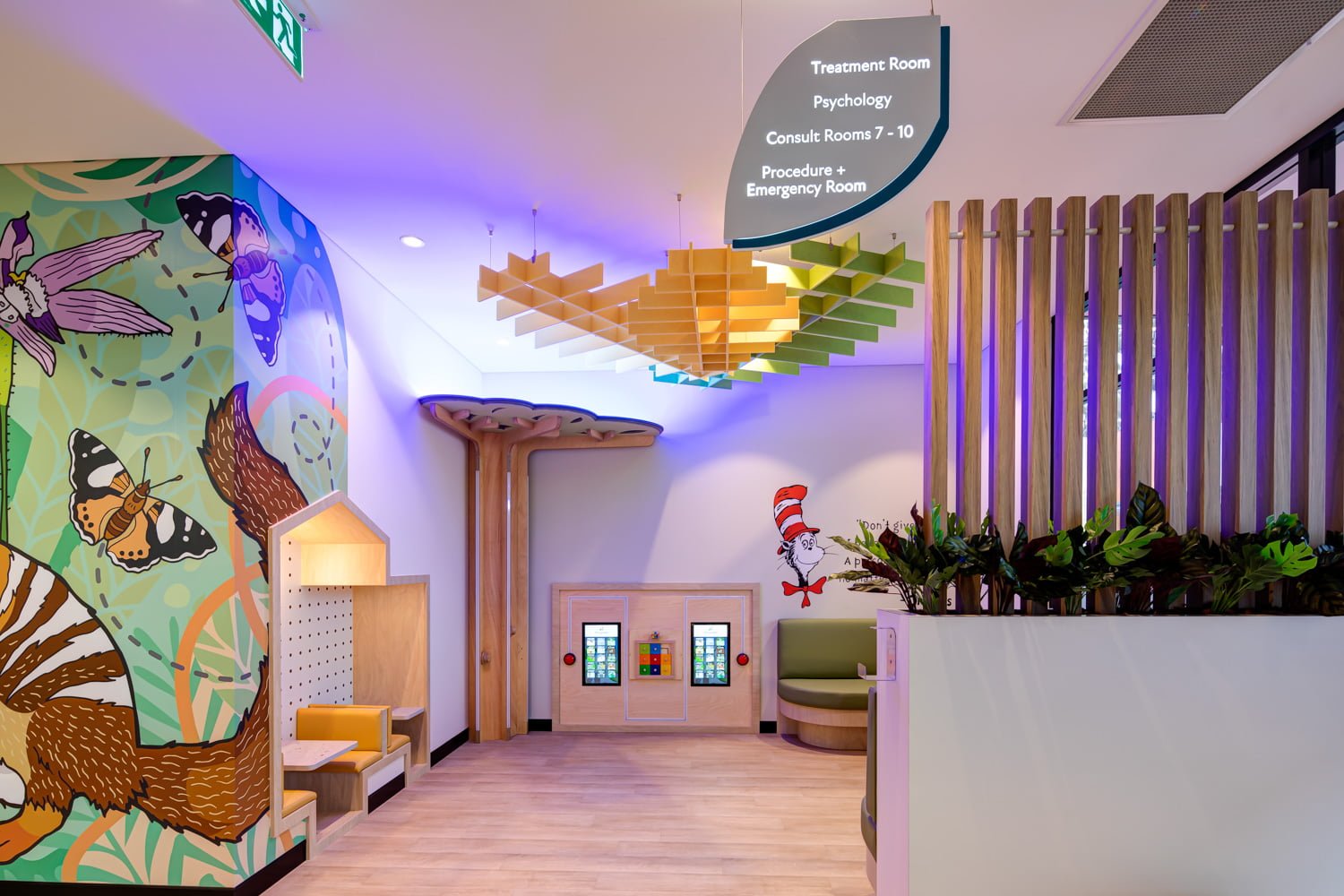
An interior design uses colours, materials and lighting to create a wayfinding system. Varying colours and materials help differentiate between the various areas of the practice. While lighting makes signage more visible.
The use of signage in medical practice has four main purposes:
- To inform (hours of operation, etc)
- To direct (turn right for the reception area)
- To identify (which examination room is which)
- Regulatory (radiation in use)
All signs should be easy to read and should stand out from the rest of the practice design so they can’t be missed.