As we step into 2026, one truth has become undeniable in healthcare design: The patient experience begins long before the consultation room.
In the clinics we work with across Australia, we’re seeing a fundamental shift. Reception desks and waiting areas are no longer treated as functional necessities or cost centres. They are now recognised as strategic spaces – environments that shape perception, trust, efficiency and even clinical outcomes.
The Silent Conversation Every Space Has
Within seconds of entering a healthcare space, patients form opinions they may never consciously articulate:
- Do I feel welcome here?
- Is this place calm, organised, professional?
- Am I just a number, or am I genuinely cared for?
In 2026, the most successful healthcare environments are those where the space answers these questions before staff need to.
Reception areas now act as the frontline of care, silently reinforcing competence, warmth and credibility. For growing businesses, they also reinforce brand – often more powerfully than any marketing campaign.
From Transactional to Human-Centred
Traditional reception design focused on efficiency: desks, queues, clipboards and barriers. Today’s leading practices are redesigning these spaces around human behaviour:
- Lower, more approachable reception points that remove the “us and them” dynamic
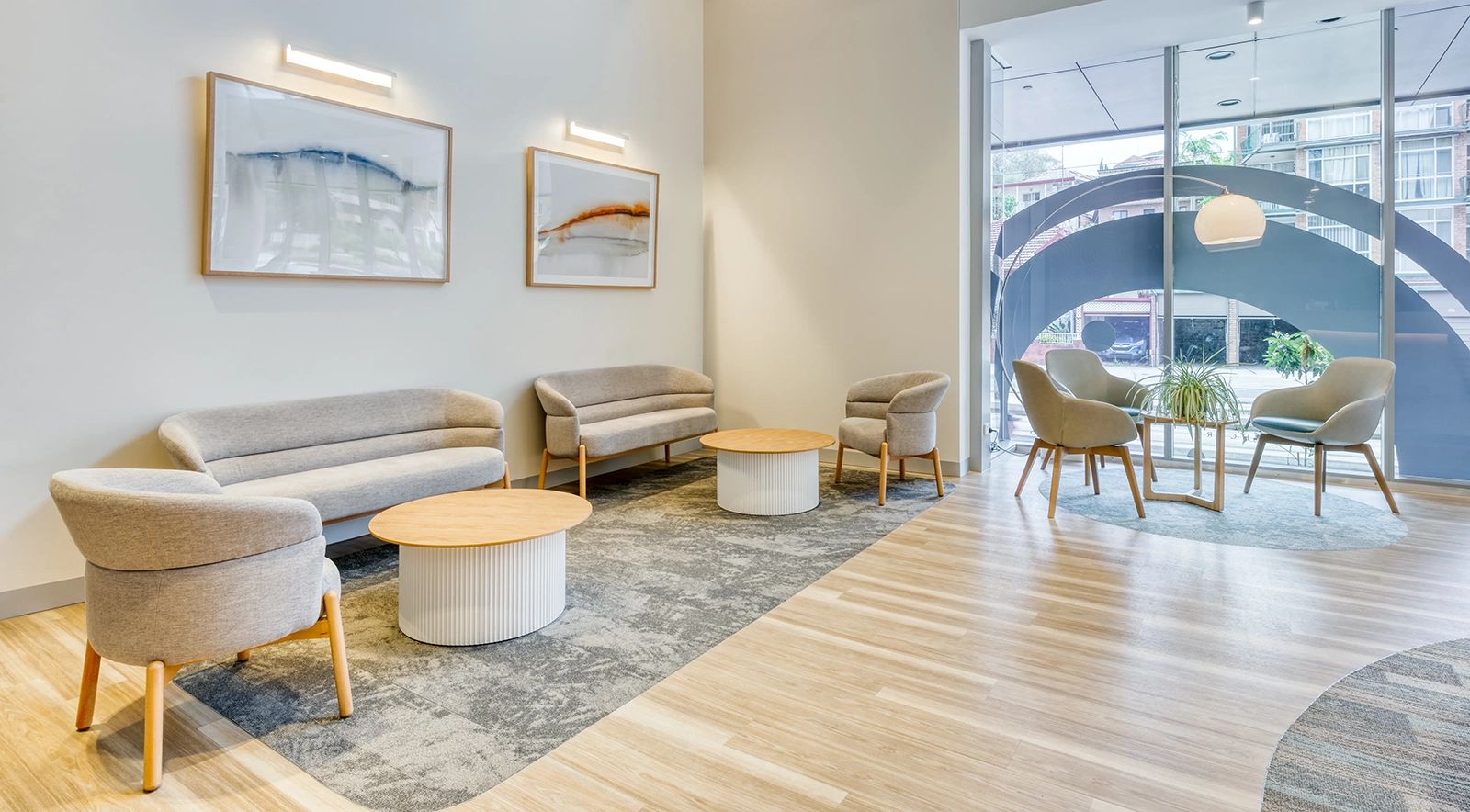
- Zoned waiting areas that reduce noise, crowding and stress
- Materials and lighting chosen to calm the nervous system, not overwhelm it
- Clear wayfinding that reduces anxiety before a word is spoken
These changes don’t just feel better – they work better. Practices report smoother patient flow, fewer front-desk bottlenecks and more positive feedback across the board.
Designing for Trust, Not Just
For clinicians, trust is everything. Patients who feel at ease are more open, more compliant and more engaged in their care, so first impressions count as they directly affect:
- Patient retention
- Brand differentiation in competitive markets
- Staff satisfaction and front-of-house efficiency
The reception and waiting area sit at the intersection of care, culture and commercial performance. When designed intentionally, they quietly support all three.
Looking Ahead: What 2026 Demands
As healthcare continues to evolve, practices that thrive will be those that see design as an experience strategy, not a finishing touch.
The question for the year ahead isn’t: “Does our reception look modern?”
It’s: “Does our reception reflect the level of care we promise and deliver?”
Because in 2026, first impressions aren’t just impressions. They’re part of the treatment.